 Healthy vision is something many people take for granted—until problems arise. In today’s digital world, where screens dominate both work and leisure, our eyes are under more strain than ever. At Ideal Family Eye Care, we believe prevention and education are key to maintaining clear, comfortable vision at every stage of life.
One increasingly popular way to support eye health is through eye vitamin supplements. But what are they, do they really work, and should you be taking them? This comprehensive guide will walk you through everything you need to know.
Why Eye Health Matters More Than Ever
From blue light exposure to aging-related conditions, your eyes face constant challenges. Common concerns include:
- Digital eye strain
- Dry eye syndrome
- Age-related macular degeneration (AMD)
- Cataracts
- Night vision difficulties
While regular eye exams are essential, nutrition plays a powerful role in protecting your vision over time.
What Are Eye Vitamin Supplements?
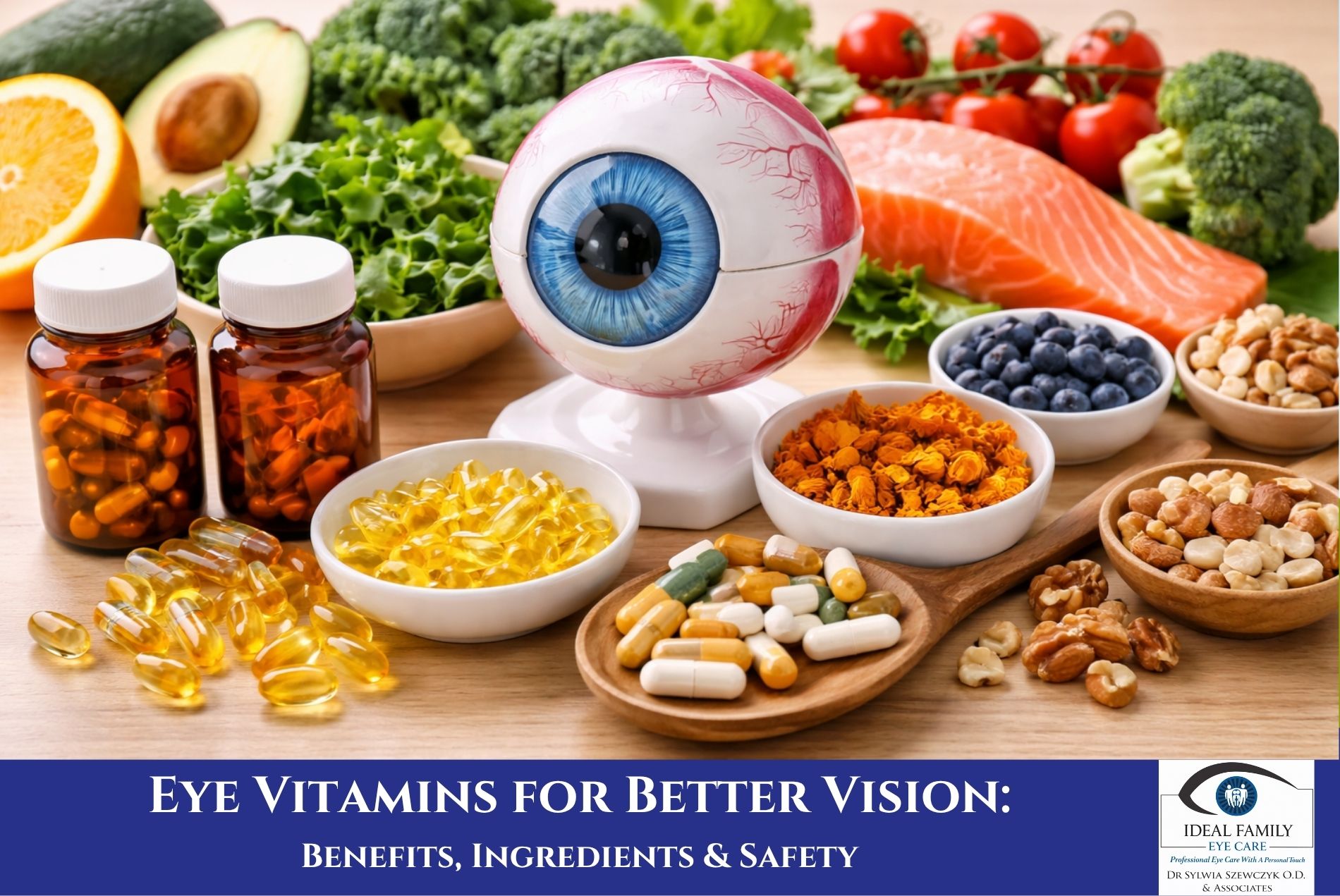
Eye vitamin supplements are specially formulated blends of nutrients designed to support the health and function of your eyes. These supplements typically contain vitamins, minerals, and antioxidants that target specific eye structures like the retina, macula, and lens.
They are not a replacement for a healthy diet—but they can help fill nutritional gaps and provide targeted support.
Key Nutrients for Eye Health
Understanding what goes into eye supplements can help you choose the right one.
1. Vitamin A
- Essential for good night vision
- Helps prevent dry eyes
- Supports the retina
2. Vitamin C
- A powerful antioxidant
- Helps reduce the risk of cataracts
- Supports overall eye tissue health
3. Vitamin E
- Protects eye cells from oxidative damage
- May slow progression of age-related conditions
4. Lutein & Zeaxanthin
- Found in the macula
- Filter harmful blue light
- Improve visual clarity and contrast
5. Omega-3 Fatty Acids
- Help reduce dry eye symptoms
- Support tear production
6. Zinc
- Helps transport Vitamin A to the retina
- Supports immune health in the eyes
The Science Behind Eye Supplements
Clinical studies like the AREDS (Age-Related Eye Disease Study) and AREDS2 have shown that certain combinations of vitamins and minerals can slow the progression of moderate to advanced macular degeneration.
However, these supplements are not a cure—and they are most effective for individuals with specific risk factors.
Who Should Consider Eye Vitamin Supplements?
Eye supplements may benefit:
- Adults over 50
- People with a family history of eye disease
- Individuals with poor diets lacking leafy greens or fish
- Those experiencing chronic dry eye
- People who spend long hours on screens
Before starting any supplement, it’s best to consult with an eye care professional to ensure it’s appropriate for your needs.
Can You Get These Nutrients from Food?
Absolutely—and you should aim to do so whenever possible. Foods rich in eye-friendly nutrients include:
- Leafy greens (spinach, kale)
- Carrots and sweet potatoes
- Citrus fruits
- Fish like salmon and tuna
- Nuts and seeds
Supplements are most helpful when your diet falls short or when you need targeted support.
Are Eye Supplements Safe?
For most people, eye vitamin supplements are safe when taken as directed. However:
- High doses of certain vitamins can be harmful
- They may interact with medications
- Not all supplements are created equal
Always choose high-quality products and follow professional guidance.
The Role of Regular Eye Exams
Even the best supplements cannot replace a comprehensive eye exam. Regular visits to your optometrist help detect early signs of:
- Glaucoma
- Macular degeneration
- Diabetic eye disease
- Vision changes
At Ideal Family Eye Care, we tailor recommendations—including supplements—based on your unique eye health profile.
Frequently Asked Questions (Q&A)
Q1: Do eye vitamin supplements really work?
Yes, but primarily for specific conditions like macular degeneration. They help support overall eye health but are not a cure-all.
Q2: Can supplements improve my vision?
They typically won’t improve your prescription or eliminate the need for glasses, but they can support long-term eye health.
Q3: How long does it take to see results?
It varies. Some people notice improvements in dryness or comfort within weeks, while long-term benefits may take months.
Q4: Are eye vitamins safe for everyone?
Most are safe, but individuals with certain medical conditions or those taking medications should consult a doctor first.
Q5: Can children take eye supplements?
Children usually get sufficient nutrients through diet. Supplements should only be given if recommended by a healthcare provider.
Q6: What is the best supplement for dry eyes?
Omega-3 fatty acids are commonly recommended to help improve tear production and reduce dryness.
Q7: Should I take supplements if I eat healthy?
If your diet is well-balanced, you may not need them. However, supplements can still provide additional support in certain cases.
Q8: Are all eye supplements the same?
No. Quality, ingredient ratios, and formulations vary widely. Professional guidance helps ensure you choose the right one.
Q9: Can supplements prevent eye diseases?
They may reduce risk or slow progression, especially for conditions like AMD, but they do not guarantee prevention.
Q10: How do I know which supplement is right for me?
The best way is through a personalized evaluation during an eye exam.
Protect Your Vision with Expert Care
Eye vitamin supplements can be a valuable part of your eye care routine—but they work best when combined with professional guidance, a healthy diet, and regular checkups.
At Ideal Family Eye Care, we are committed to helping you and your family maintain clear, healthy vision for years to come.
Contact Information
Ideal Family Eye Care
5526 N Milwaukee Ave, Suite B
Chicago, IL 60630
Phone: (773) 774-2200
Website: ifeyecare.com


